


By Banafsheh Zand and Sophie Baron-AmirTeymour
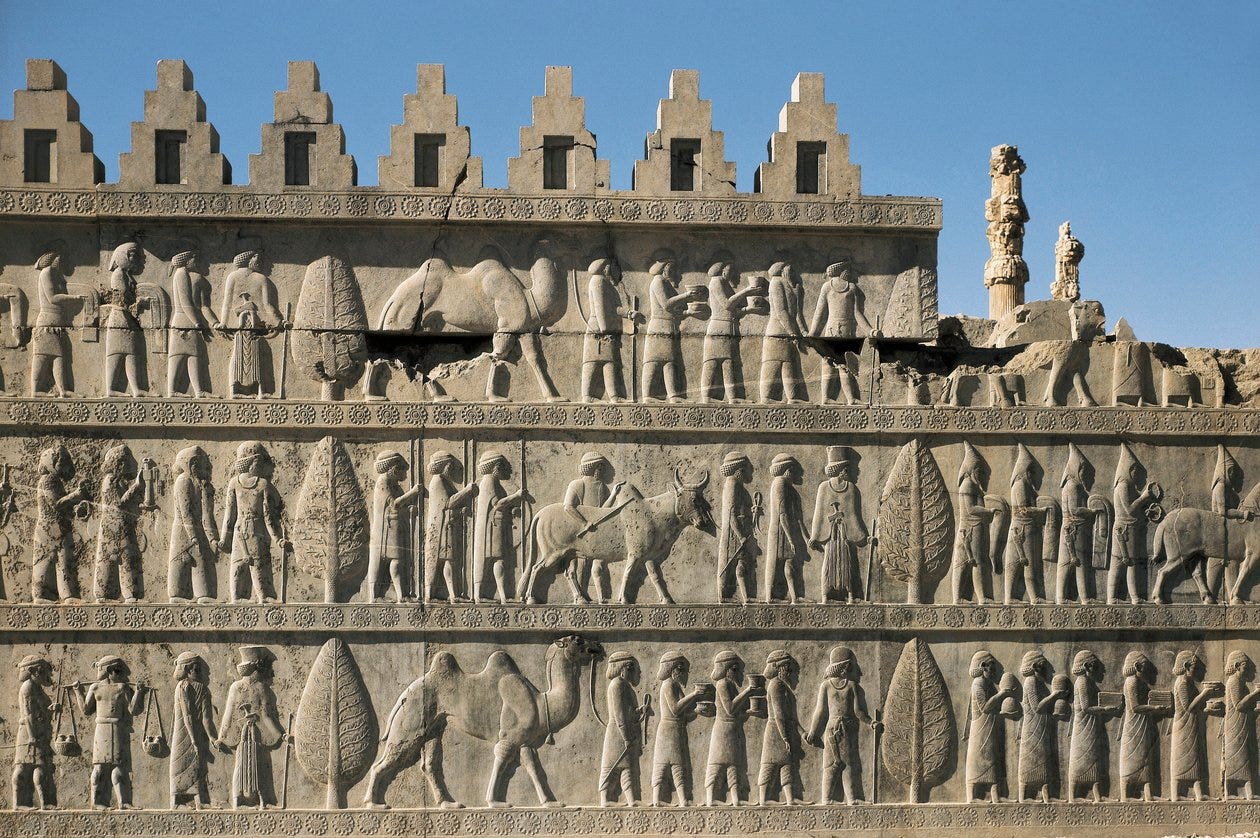
Iran is one of the oldest, if not the most ancient, nations in the world. It has a continuous history of human occupation since about 5000 B.C., according to archaeology, and the ancestors of today’s Iranians—the tribes of Medes, Persians, Parthians, Elamites, etc.—have long been well known to scholars. The various Iranian tribes were first united into a single nation by Cyrus the Great (600–530 B.C.), and the identity of Iran created during his era proved to be so deep-felt that it survived countless foreign invasions and momentary periods of chaos and disunion. Indeed, every foreign invader of Iran—whether Greek, Arab, Turk, or Mongol—ultimately ended up being conquered by Iranian culture, and their descendants absorbed into the Iranian nation. In a way, Iran was the original “melting pot.”
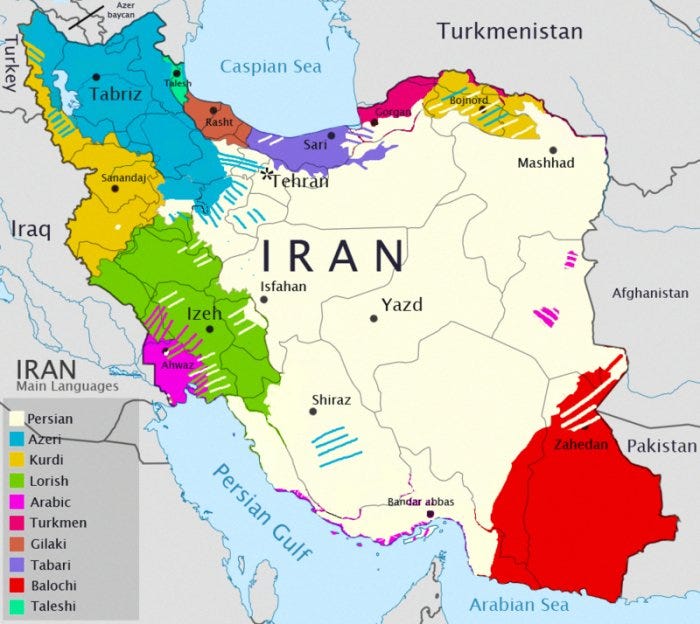
Despite this history, there is a misunderstanding among certain Western circles that sees Iran as an empire, rather akin to the old Russian Empire of the Tsars, where one dominant nationality oppresses an assortment of minority ethnicities. The spread of this misunderstanding has been aided by the very real repression of minority cultures in Iran by the Islamic regime, an entity that permits no culture to exist in opposition to the imposed Shi’a order. To correct this misunderstanding, it is worth mentioning some scientific facts about Iranians and exploring the history and current struggles of the minority groups in Iran.
The Genetic Accord of Iranians
Scientific studies of Iranians’ DNA have discovered a surprising uniformity across the entire nation, including peoples who speak different languages and who are sometimes attributed to different ethnicities. This DNA has also been shown to be nearly identical to that of the inhabitants of Iran from thousands of years ago, as 70–90% of modern Iranians share genetic continuity with DNA sequenced from the remains of farmers who lived in the Zagros Mountains during the Neolithic era. According to these scientists, these farmers—the earliest inhabitants of the Iranian plateau—were not offshoots of Anatolian or Levantine groups, but a distinct branch of humanity that diverged from the others many tens of thousands of years ago and remained rooted in Iran while Europe was still a barely inhabited forest. These genetic studies additionally reveal that even recent Iranian royal dynasties of originally non-Iranic descent have become so blended into the Iranian nation that their current descendants are indistinguishable from the rest of the regional population.
Centuries of intermarriage among the peoples of Iran have produced a remarkable fusion of bloodlines that makes any rigid ethnic classification effectively meaningless. From the earliest historical periods, Iranians of all ethnic classifications have lived in close proximity, traded, served together in armies, and intermarried across regional and linguistic lines, giving rise to generations whose ancestry cannot be confined to a single tribe or label. The geographical unity of the Iranian plateau, coupled with millennia of shared institutions, religions, and civic life, has created a population bound together by deep genetic and familial ties. To claim that any modern Iranian is “purely” Kurdish, Azeri, Baluch, or otherwise is to overlook the biological and cultural reality of a nation whose very strength has always rested on this interwoven identity.
Rather than diluting Iranian identity, this long process of blending has served to preserve it. The diversity within Iran has been a vital source of resilience, ensuring that no invasion, migration, or ideology could destroy the collective character of its people. The intertwined lineages of Iran’s tribes and regions have transmitted the same civilizational essence through countless generations—an enduring continuity of memory, language, and pride. This intermixture is not a sign of fragmentation but of survival: it is how Iran has remained Iran through the vicissitudes of history.
Roots of Separatist Movements
So then, how did separatist identities form amidst a homogenous people? It originally began with foreign instigation. The British, who developed the oil industry in Khuzestan in the early 20th century, did not want to share its profits with the Iranian government—or run the risk of eventually seeing their cash cow expropriated. Thus, they made deals with local strongmen who were happy to advance their power with pound sterling. One of these petty lords was Sheikh Khazal of Mohammerah, who declared the part of Khuzestan under his (and British) control to be the “Emirate of Arabestan.” Ultimately, the Sheikh was defeated by Reza Shah the Great in 1924 during his campaigns to reunify Iran, and “Arabestan” was forgotten—but its memory was later used by pan-Arabists such as Gamal Abdel Nasser and Saddam Hussein to justify their desires to annex Iranian territory.
The case of Azerbaijan is even more interesting. This Iranian region derives its name from that of the Median general Atropates, who lived during the time of Alexander the Great. The nation now known as Azerbaijan was originally called Arran, and the people of both areas spoke a Persian dialect until the Seljuk Turk conquests of the Middle Ages. As the above-mentioned genetic studies prove, however, the populace remains Iranian despite the language change. In fact, until the 20th century, many inhabitants of what is now the nation of Azerbaijan spoke an Iranian language called Tat. Modern Azeri nationalism was a creation of the Bolsheviks, who saw it as a means of annexing Iranian Azerbaijan to the USSR, which they attempted to do in 1945. Since the collapse of the Soviets, the banner of Azeri separatism has been flown by various Pan-Turkist groups, as well as the heirs of the KGB in Azerbaijan.
The Baluch are a very ancient Iranian people whose territory was unfortunately bifurcated between Iran and what is now Pakistan during the 19th century. They have been a part of Iranian history since its beginning, only becoming somewhat autonomous when the Iranian government was weak or disordered.
The most famous Iranian minority are, of course, the Kurds. Descended from a tribe of Medes, the Kurds have always been conscious of their Iranian identity (some Kurds still practice pre-Islamic religions akin to Zoroastrianism). Today split between Iran, Iraq, Turkey, and Syria, Kurds have been victims of genocidal governments (Ottoman Empire, Saddam Hussein), and Kurdish nationalism has also been exploited by the Soviets as a means of destabilizing nation-states—whether it be the Mahabad Republic of 1945 in Iran, or the (formerly) Marxist-Leninist Kurdistan Workers’ Party in Turkey. Today, among others, calls for a Greater Kurdistan are promoted by certain “revolutionary tourists.”
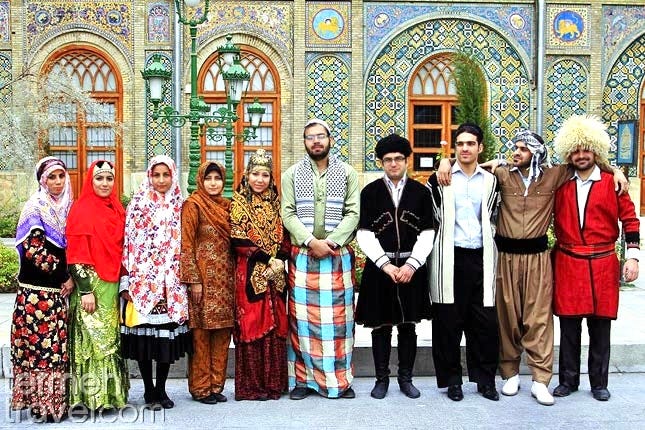
Other Iranian tribes include the Lurs, Bakhtiaris, Gilakis, and Mazandaranis, all of whom speak Iranian languages descended from Middle Persian. All of these peoples consider themselves Iranian, and it is only in some Western sources that they are classified as separate ethnicities.
Khomeinism versus Peoples
When Reza Shah the Great began rebuilding Iran from what had become almost total dissolution in the 1920s and making it into a modern nation-state, he had to subdue the centrifugal forces of tribalism and politically reunite the peoples. Thus, he enacted projects of nomad settlements, standardization of Persian as a national language, and a unitary education system with a goal of raising a generation of Iranians that would feel they were all part of one entity. As time went on, it became apparent that the Pahlavi era perhaps went too far in the direction of centralization and that minority groups may sometimes not have received proper respect, especially regarding the right to their languages. However, the government of that time can arguably be forgiven, if only because separatist movements were being actively supported by both the USSR and Great Britain. The attachment of minorities to their Iranian nationhood was proven not only in 1946—when Azeris and Kurds themselves rose up to expel their Soviet-imposed puppet governments—but also in 1979, when Iranian Turkmen openly stood up for the monarchy against Khomeini’s imposition of the Islamic regime.
As soon as Khomeini seized power in 1979, however, his regime began open warfare against minorities—conducting mass summary executions of Kurds, to cite one instance—and this warfare has not ceased to this day. Khomeinist totalitarianism cannot tolerate any differences at all under its monolithic order, and it also knows that pitting one group against another is a good tactic for dividing the populace to prevent them from coming together against the clerics.
Today, not only is it illegal for minorities to publicly use their languages, but they also cannot even name their children as they wish and must use regime-approved names. In Azerbaijan, regime-controlled media publicly attack and libel the locals. In Kurdistan, people wearing their local dress are being arrested. In Khuzestan, Arabic-speaking residents are forced out of their residences and dispersed throughout the province while other Iranians are resettled in. As for Baluchistan, where the population is Sunni and not Shi’a, the regime does not even grant locals national ID cards, effectively depriving them of citizenship in their own homeland. Whole towns’ worth of Baluchis have been executed on trumped-up narcotics charges. With such inhumane treatment, it is no wonder that a few individuals in these areas would start to think that separating from Iran might be a solution to their woes, but the majority of Baluch, Kurds, Azeris, etc., by far continue to think of themselves as proud Iranians who only seek their rights as human beings.
The Way Forward
Iran is the only nation-state in the Middle East with natural, not artificially drawn, borders. Though its current territory is a truncated rump that had been sliced by the Russian and British Empires, contemporary Iran is an intrinsic whole. If a foreign entity were to trigger a collapse of Iranian unity, the resulting chaos would make the recent sectarian and tribal wars in the Arab countries (Syria, Iraq, Yemen, etc.) look like a street fight. Not only would irredentist impulses spill over into neighboring states (Turkey, Pakistan, or Afghanistan, for example), but any mini state that successfully broke away from Iran would almost certainly not have the land or natural resources to economically sustain itself. Iran’s national wealth has long been derived from its oil, located mostly in Khuzestan, and if a province were to cut itself apart from this oil, its economic fortunes would decrease by a high degree.
In a future democratic Iran, every people will have the right to their own language, education system, and culture. A government responsible to its people cannot oppose their wishes. A nation that has absorbed countless cultural influences has nothing to fear from differences among its peoples, and no minority has anything to fear from the Iranian-ness that unites the nation. When the national wealth is distributed fairly to all of Iran’s regions and provinces, there will be no desire for any rational person to want to secede from Iran.
A country awaiting Freedom-not unlike the USA in 1776